Signs a Spring Has Broken
A loud bang from the garage, often when nobody was using the door
The spring let go under tension
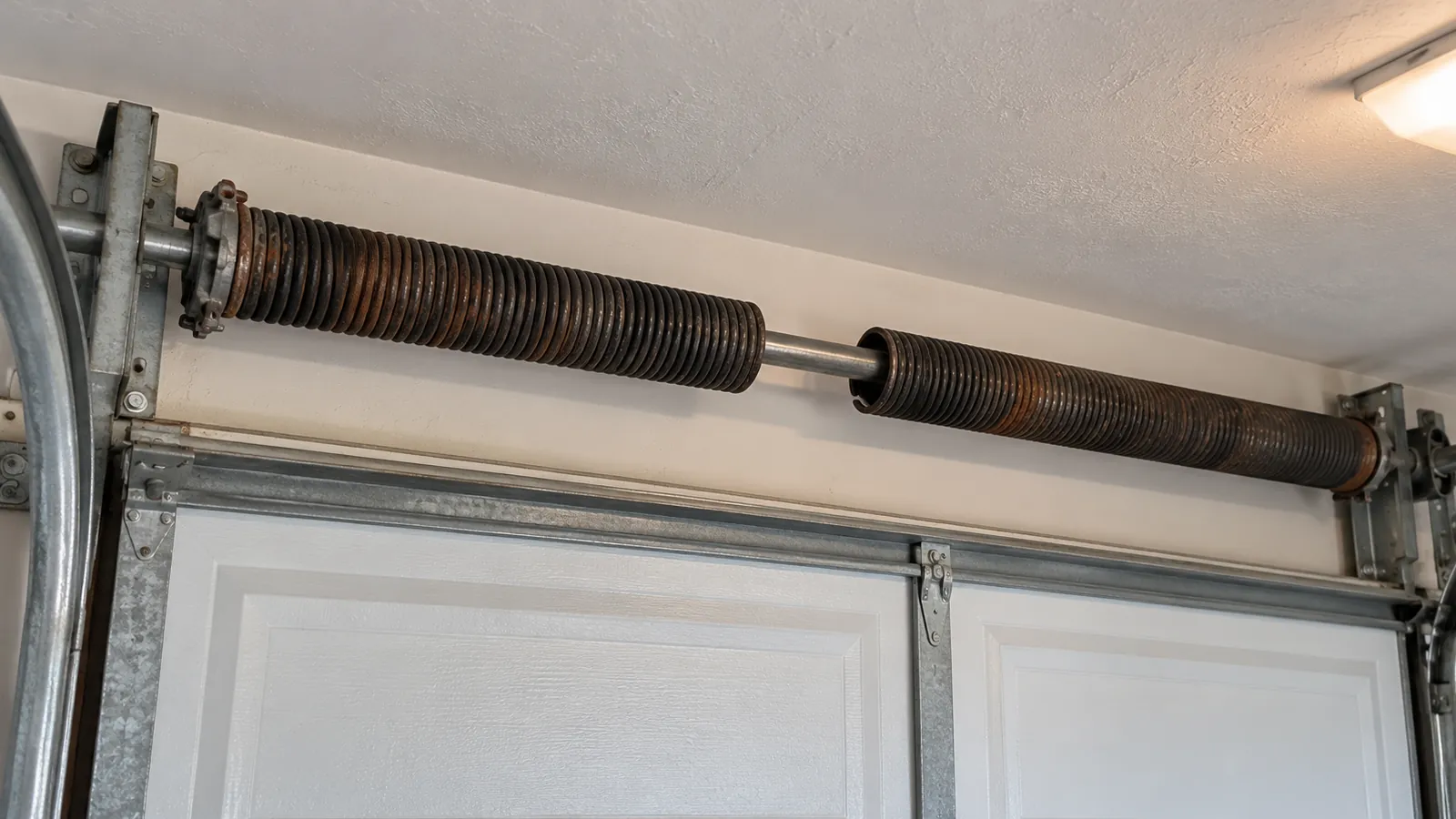
A visible gap in the coil above the door
A broken torsion spring
The door rises a few inches, then the opener stops
The opener sensed the door is too heavy
The opener light flashes or it strains and hums
Too much weight on the opener
The door goes up crooked
One of two springs is broken, or a cable slipped
Why Springs Break
Springs wear out like tires. Each open and close is one cycle, and a standard spring is built for about 10,000 of them.
If your family uses the garage as the front door, four or five trips a day adds up fast. That's why so many springs in Durham break somewhere between six and ten years in, often on a cold morning when the steel is stiff.
Rust speeds things up. Our humid summers leave a film of moisture on the coils, and a spring that never gets oiled wears out sooner.
Torsion, Extension and Enclosed Springs
Most homes have a torsion spring: a big coil on a metal bar right above the door. It's the sturdiest type and also the most dangerous to work on.
Some older homes and detached garages use extension springs that run along the tracks on each side.
They should have a safety cable running through them so a broken spring can't whip across the garage. If yours don't, ask the technician to add them.
A few doors have the spring sealed inside a metal tube. Those tend to wear out sooner, and many technicians will suggest switching to a standard torsion setup when they fail.
One Spring or Both?
If your door has two springs and one broke, the other one is the same age and has done the same work. Nobody can tell by looking how long it has left.
That's why most technicians suggest replacing both at once. It saves a second visit and a second trip charge. But it's your call. Replacing just the broken one is a legitimate, cheaper choice, and a fair technician will lay out both options.
Standard or Longer Life Springs
You'll often get two prices. Standard springs are rated for about 10,000 cycles. Upgraded springs are rated for 25,000 to 30,000 cycles.
The upgrade often costs about twice as much and lasts about three times as long. If you plan to stay in the house and use the garage every day, it's usually worth it.
One thing you can't do is go smaller to save money. Springs are matched to the door's weight. A heavy wood or carriage door may need four springs, and a spring that's too light won't lift it.
What Else Gets Checked
A spring that broke was working hard, so the rest of the door deserves a look. A good technician checks the cables for fraying, the drums for cracks, the bearings, the rollers and the hinges, then sets the balance and the opener's force.
Sometimes they'll find something else worn out. Sometimes a door that feels heavy isn't a spring at all but rollers or hinges that bind. Read about rollers and hinges if your springs look whole.
For prices, see the spring replacement cost guide. If the door is old and the repair list is long, the repair or replace guide can help.
Door stuck closed? Send the form or call (919) 555-0136.